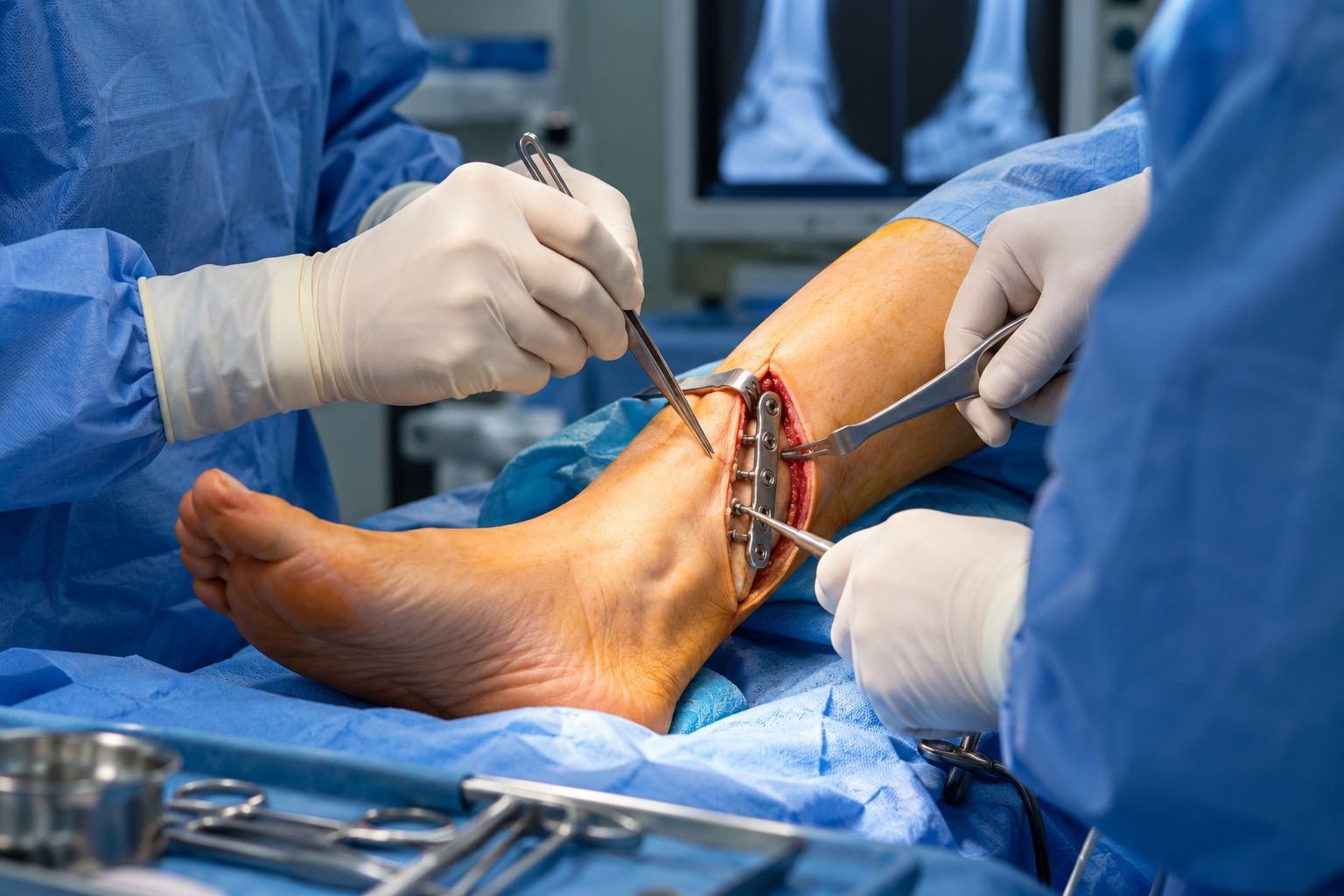
A surgical appointment should clarify whether your problem needs an operation at all, which tests support the diagnosis, and what recovery would involve. By the end, you will know when to seek urgent care, what to bring to a consultation, which questions to ask, and how to compare surgery with non-surgical treatment.
Key takeaways
- Seek urgent care for an open fracture, deformity, pulseless foot, fever, or new numbness.
- Bring prior scans, medication details, medical history, and a list of your goals.
- Compare surgery with physiotherapy, medication, injections, footwear, or observation.
- Ask for the procedure, recovery timeline, risks, follow-up, and itemised estimate in writing.
When a surgical opinion is appropriate—and when it is not
Do not book a routine surgical appointment if you have an open fracture, a visibly deformed or dislocated joint, a cold or pulseless foot, rapidly worsening pain or swelling, redness spreading with fever, or new loss of sensation or movement.
Go to urgent evaluation instead; these signs can indicate threatened tissue, infection, or a serious injury.
A consultation with a foot ankle surgeon in Thane is justified when the problem is persistent, structurally significant, or limiting despite sensible initial care. Book a surgical opinion for:
- Inability to bear weight after an injury
- Repeated ankle giving-way or instability
- A displaced fracture or visible deformity
- A suspected tendon rupture
- Persistent swelling or pain that restricts walking, work, or sleep
- Symptoms that continue after appropriate physiotherapy, footwear changes, orthotics, medicines, or immobilization
Surgery is not usually the first step for a mild sprain, uncomplicated plantar fasciitis, early tendinopathy, a stable fracture, or pain that has not yet been assessed with non-surgical treatment. Depending on the diagnosis, activity modification, supportive footwear, weight management, physiotherapy, injections, or a brace may settle the problem.
Seek a surgical opinion when non-operative care has been properly tried or when examination shows a structural problem requiring correction. Ask for the exact diagnosis and procedure name—such as tendon repair, ligament reconstruction, fracture fixation, ankle fusion, or ankle replacement—because “foot ankle operation” does not describe one predictable treatment.
What happens during the consultation and which tests matter
A foot and ankle surgery consultation in Thane starts with your history and a physical examination, not an automatic operation recommendation. The surgeon will ask where the pain began, how long it has lasted, whether you can bear weight, what treatment you have tried, and how work, sport, and footwear affect you.
Examination includes gait, deformity, swelling, skin, pulses, sensation, nerve function, strength, and joint and tendon range of motion.
Bring these records:
- Previous X-ray, ultrasound, CT, or MRI reports and the original images or digital files, not only photographs of reports.
- Injury, operation, discharge, and physiotherapy records, including implant details if you have had earlier surgery.
- A list of medicines, allergies, medical conditions, and prior injections, braces, orthotics, or pain treatments.
- Your work or sports requirements and a short record of walking limits, giving-way episodes, swelling, and pain triggers.
Test choice depends on the suspected problem:
| Test | What it shows | When it matters |
|---|---|---|
| Weight-bearing X-ray | Bone alignment, arthritis, fracture, deformity | Bunions, flatfoot, arthritis, old or new fractures |
| Ultrasound | Tendons, fluid, some ligament injuries | Superficial tendon pain or suspected rupture |
| MRI | Cartilage, tendons, ligaments, nerves, bone marrow | Persistent pain with unclear soft-tissue injury |
| CT scan | Detailed bone and joint structure | Complex fracture, fusion planning, or surgical anatomy |
| Blood tests | Infection, inflammation, or surgical fitness | Only when symptoms or medical history justify them |
Ask for the exact diagnosis and proposed procedure in writing. “Bunion surgery” and “ankle replacement” are not interchangeable; each requires different preparation and recovery.
How surgery is compared with treatment without an operation
Decision starts with the diagnosis, not the pain score. The surgeon matches examination findings and imaging with your walking limits, work or sports demands, medical risks, and treatment already attempted.
The phrase “foot ankle operation in Thane” is too broad to predict a plan: bunion correction, tendon repair, ligament reconstruction, fracture fixation, ankle fusion, and ankle replacement have different purposes and recovery demands.
| Option | What it does | When it fits |
|---|---|---|
| Observation and activity change | Reduces loading while symptoms settle | Mild or improving problems, stable injuries, or symptoms not yet tested with conservative care |
| Physiotherapy | Builds strength, balance, mobility, and movement control | Sprains, tendinopathy, weakness, stiffness, and some instability |
| Brace, orthotics, or footwear changes | Supports alignment or limits painful motion | Mechanical overload, selected deformities, instability, or pressure-related pain |
| Injection or medicine | Calms inflammation or pain; it does not repair a torn tendon or correct displaced bone | A diagnosis where temporary symptom control supports rehabilitation |
| Operation | Repairs, realigns, stabilises, replaces, or fuses damaged structures | Persistent disabling symptoms after appropriate non-operative care, or a structural problem needing correction |
The operation must match the failure: fixation for an unstable fracture, reconstruction for repeated ligament giving-way, and tendon repair for a rupture. For advanced ankle arthritis, fusion removes painful motion but transfers stress to nearby joints; replacement preserves motion but carries implant-specific risks and possible revision.
Ask what improvement is expected, what happens if you wait, and why this procedure is preferable to the alternatives.
What recovery, risks, and preparation should be discussed first
Do not agree to a “foot ankle operation in Thane” until the surgeon names the diagnosis and exact procedure. Bunion surgery, tendon repair, ligament reconstruction, fracture fixation, ankle fusion, and ankle replacement have different restrictions, risks, implants, and recovery timelines.
Ask for procedure-specific milestones in writing. Clarify how long you will use a splint, cast, boot, crutches, or wheelchair; when partial and full weight-bearing begin; when you can drive, work, climb stairs, and exercise; and how physiotherapy will progress. Wound care and swelling control come first, while swelling can last for months.
Returning to desk work does not mean you are ready for unrestricted sport.
Before consent, get answers to these questions:
- Which complications fit this operation: infection, wound breakdown, nerve injury or numbness, stiffness, persistent pain or swelling, blood clots, hardware irritation, nonunion or malunion, and further surgery?
- What medicines must you stop or continue, especially blood thinners, diabetes medicines, and anti-inflammatory drugs? Ask about smoking, fasting, allergies, and medical conditions that increase anaesthetic or healing risk.
- Who will take you home, help with bathing and meals, and respond if pain, fever, drainage, a tight cast, or numb toes develops?
- What equipment, dressings, follow-up visits, imaging, and physiotherapy will you need?
A technically successful operation may not produce a pain-free or normal foot. Get urgent advice for severe calf pain, chest pain, breathlessness, or a cold, blue, numb foot after surgery.
How to choose the surgeon, check the estimate, and decide whether to book
Before booking a foot ankle surgery appointment in Thane, verify the doctor’s medical registration, orthopaedic training, foot-and-ankle experience, and hospital privileges. Confirm that the facility has anaesthesia, imaging, rehabilitation, and postoperative emergency support.
Ask these questions in writing:
- Who reviews your wound, cast, splint, or pain after discharge?
- Which exact diagnosis and procedure are proposed?
- What happens if you need an overnight stay, hardware removal, or revision?
- Who provides urgent care outside clinic hours?
Compare estimates by checking whether each includes the same items:
| Item | What to confirm | Why it changes the total |
|---|---|---|
| Surgeon and hospital fees | Separate professional, theatre, and room charges | Prevents a bundled quote hiding exclusions |
| Implants and hardware | Device type, manufacturer, and later removal cost | Plates, screws, anchors, or replacements differ in price |
| Anaesthesia and tests | Anaesthetist, imaging, blood tests, and monitoring | These may sit outside the surgical fee |
| Aftercare | Medicines, dressings, physiotherapy, reviews, and complications | Recovery costs continue after discharge |
Arrange transport, an adult to stay with you initially, help with bathing and meals, and a safe plan for stairs or non-weight-bearing movement. Ask for procedure-specific milestones; swelling can last months.
A second opinion is sensible before fusion, replacement, major reconstruction, or surgery with a large cost or irreversible result. Seek one if the diagnosis, procedure, risks, or estimate remains unclear.
About The Bone & Joints - Advance Ortho Care can be one clinic you compare, but use the same verification checklist for every foot ankle surgeon in Thane.
Related service
Foot and Ankle Surgery Dr. Darshan Shinagne, located on Kolshet Road, Thane, offers advanced foot and ankle surgery treatments for various orthopedic conditions and... View service → |
Frequently asked questions
When should I seek urgent care instead of booking a routine foot and ankle surgery consultation?
Seek urgent care for an open fracture, visibly deformed or dislocated joint, cold or pulseless foot, rapidly worsening pain or swelling, redness spreading with fever, or new loss of sensation or movement.
What happens during a foot and ankle surgery consultation in Thane?
The surgeon reviews your symptoms, injury or activity history, medical conditions, medicines, and examination findings. Bring previous X-rays, MRI or CT scans, reports, and a list of your questions. Tests depend on the suspected problem and can include weight-bearing X-rays, ultrasound, MRI, CT, blood tests, or nerve and vascular assessment.
How is surgery compared with treatment without an operation?
Ask which non-operative options fit your diagnosis, such as activity changes, physiotherapy, medication, injections, braces, orthotics, footwear changes, or observation. Compare expected pain and function, time to recovery, chance of recurrence, restrictions, risks, and what happens if treatment does not work.
What should I ask before booking a foot ankle operation in Thane?
Ask who will perform the procedure, the exact operation and implant if relevant, anaesthesia plan, hospital or facility, preparation instructions, expected hospital stay, weight-bearing restrictions, physiotherapy, follow-up schedule, complications, and an itemised estimate covering surgeon, facility, anaesthesia, tests, implants, medicines, and follow-up.
Keywords