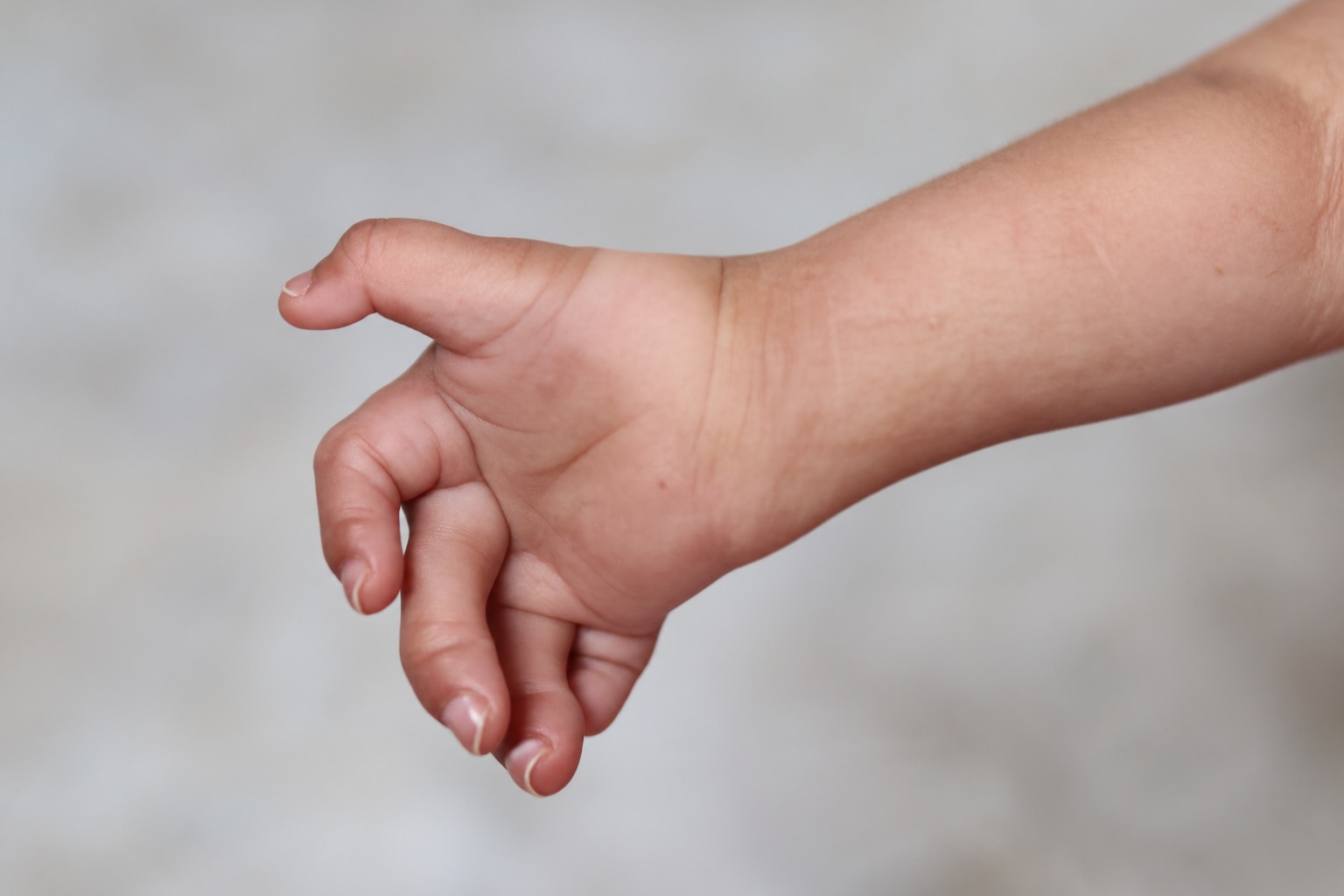
Radial club hand is a congenital difference in which the radius and other structures on the thumb side of the forearm and hand are underdeveloped or absent. Understanding the pattern, associated health conditions, and treatment trade-offs helps you seek the right evaluation and set practical goals for grasp, pinch, alignment, and independence.
Key takeaways
- Radial club hand involves the radius, wrist, forearm, and often the thumb.
- Doctors assess the entire upper limb, not only wrist position.
- Mild cases may need observation and therapy; severe deformity may require surgery.
- Long-term reviews track growth, alignment, thumb function, and hand use.
What Is Radial Club Hand, and How Does It Differ From Other Wrist Problems?
Radial club hand is a congenital difference in the thumb-side forearm, formally called radial longitudinal deficiency. The radius may be shortened, called a hypoplastic radius, partly missing, or an absent radius. The wrist bends toward the thumb side, the forearm is shorter, and the thumb may be small or absent.
Stiff fingers, altered wrist bones, an unusually shaped ulna, or elbow differences can also occur.
The Bayne–Klug pattern describes severity: type I has a mildly shortened radius, type II a hypoplastic radius, type III partial absence, and type IV complete absence. The visible bend is only one part of the problem. Weak thumb pinch, poor grasp positioning, limited wrist stability, and reduced forearm growth can matter more than appearance.
| Condition | Clues that distinguish it |
|---|---|
| Radial longitudinal deficiency | Present from birth; shortened or absent radius, radial wrist deviation, and thumb deficiency. |
| Radial nerve palsy or wrist drop | The radius is present; weakness prevents wrist or finger extension, often with altered sensation or a nerve injury. |
| Madelung deformity | Usually develops during growth; the radius and wrist bones are abnormally shaped, but the thumb-side forearm is not typically missing. |
| Thumb hypoplasia alone | A small or absent thumb occurs without the characteristic shortened radius and forearm deviation. |
| Acquired wrist deformity | Begins after fracture, infection, growth-plate injury, or another illness rather than during limb formation. |
Because radial longitudinal deficiency can accompany heart, kidney, blood-count, and skeletal abnormalities, a child needs more than a wrist examination.
Why Does Radial Longitudinal Deficiency Require More Than a Wrist Examination?
A wrist examination cannot show whether radial longitudinal deficiency is isolated or part of a broader developmental disorder. Doctors investigate radial club hand causes because development may also affect the heart, kidneys, blood cells, bones, nerves, and blood vessels.
Early evaluation commonly includes:
- Asking about pregnancy, the child’s development, family history, bruising or bleeding, and other congenital differences.
- Examining both arms, including forearm length, elbow movement, wrist stability, thumb formation, thumb strength, finger motion, sensation, and circulation.
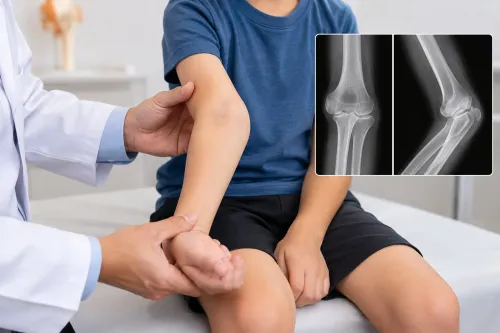
- Ordering X-rays of both forearms and hands to show the radius, ulna, wrist bones, thumb, and other skeletal differences.
- Checking for thrombocytopenia-absent radius syndrome, which combines an absent radius with a low platelet count, and Fanconi anemia, which can cause bone, blood, and organ abnormalities.
- Considering Holt-Oram syndrome when upper-limb differences occur with heart defects, and VACTERL association when vertebral, anal, cardiac, tracheoesophageal, renal, or limb abnormalities occur together.
- Ordering a complete blood count, Fanconi anemia testing, echocardiography, kidney imaging, or genetic evaluation when the examination, history, or X-rays indicate a need.
This work-up is individualized, not automatic for every child. Finding an associated condition changes safety planning, specialist referrals, and follow-up; it also prevents a wrist operation from becoming the only treatment decision.
How Do Doctors Judge Severity and Choose Between Observation, Therapy, and Surgery?
The Bayne-Klug classification helps grade the structural problem: radial deficiency types I to IV range from a mildly shortened radius to complete absence. Higher-grade deficiency often brings greater radial deviation, thumb deficiency, and forearm shortening, but the label cannot measure grip, pinch, pain, or a child’s ability to use the hand.
Examination shows what the classification misses. Doctors assess wrist flexibility, radial deviation and wrist stability, thumb position and pinch, finger motion, forearm rotation, strength, and both limbs. X-rays show bone structure; the treatment goal is useful grasp and positioning, not simply a straighter appearance.
| Treatment path | What it aims to do | When it fits |
|---|---|---|
| Observation | Monitor alignment, growth, flexibility, and hand use | Mild deformity, stable function, or medical issues requiring delay |
| Occupational therapy and splinting | Preserve motion, support the wrist, improve positioning, and teach adaptations | Flexible wrists, growing children, or preparation before surgery |
| Surgery | Reposition and stabilise the wrist over the ulna, with additional reconstruction when needed | Severe deviation, poor stability, progressive deformity, or functional limitation |
A child who can pinch, grasp, and place the hand in front of the forearm may need monitoring rather than correction of appearance alone. Severe structural deviation with a flexible wrist often leads to early reconstruction, while stiffness, absent thumb function, associated illness, and family priorities influence timing and the procedures selected.
Therapy remains important after either observation or surgery.
Which Operations Improve Wrist Alignment, Thumb Pinch, and Hand Use?
A straighter wrist does not automatically create useful pinch: each operation targets a different missing structure. Radial club hand surgery may combine procedures, but centralization and radialization mainly reposition the wrist and improve stability.
| Option | What it changes | What it leaves unchanged |
|---|---|---|
| Centralization | Centers the wrist bones over the ulna and balances tight soft tissues | Does not create a radius, normal forearm growth, or a thumb |
| Radialization | Moves the hand toward the ulna and improves wrist alignment and support | Does not remove ulnar bowing, stiffness, or the risk of recurrent deviation |
| Pollicization | Converts a suitable index finger into a thumb to improve opposition and pinch | Sacrifices the index finger’s original role and does not produce a normal thumb |
| Tendon transfer | Redirects a functioning tendon to correct imbalance or improve active motion | Does not rebuild absent bones or restore normal muscle strength |
| Thumb reconstruction and tendon transfer | Strengthens or stabilizes a weak thumb and improves grasp in selected cases | Cannot guarantee normal pinch when the thumb, nerves, or joints are severely underdeveloped |
A wrist-alignment operation helps place the hand in front of the forearm for grasp, but it cannot recreate a missing radius or normalize the fingers. Recurrent radial deviation, growth disturbance, stiffness, and later revision remain possible.
Selected children may also need soft-tissue release, ligament reconstruction, or forearm lengthening. These procedures address a specific restriction or instability; they do not replace the function of a thumb, which often matters more for practical hand use than cosmetic wrist straightening.
What Should Families Expect During Growth and Long-Term Follow-Up?
A straight wrist in infancy does not guarantee a lasting result. During growth, the ulna and wrist may develop unevenly, so recurrent radial deviation can appear after an initially successful reconstruction. Radial club hand long-term follow-up should continue through growth, with checks of alignment, hand use, forearm rotation and wrist motion.
Before surgery, ask the paediatric hand specialist evaluation to address:
- The risk of infection, stiffness, nerve or blood-vessel injury, and growth disturbance
- The chance of recurrent deviation, ulnar bowing, tendon imbalance, or later revision surgery
- What alignment improvement is realistic when the radius or thumb is absent or severely underdeveloped
- How the operation could affect grasp, pinch, strength, and forearm movement
Surgery improves positioning; it does not create a missing radius, restore a normal thumb, or guarantee normal strength. A technically successful reconstruction can still leave reduced wrist motion or limited forearm rotation.
Stretching, splinting, occupational therapy, and hand therapy often remain important after surgery. Therapy preserves flexibility and teaches practical grasp strategies, but it cannot correct every structural limitation. Families should plan for appointments, splint changes, exercises, and reassessment during growth rather than treating rehabilitation as a short recovery phase.
About The Bone & Joints - Advance Ortho Care can help families organise local hand and wrist assessment, but ask for a paediatric hand specialist evaluation when growth-related deformity or revision decisions are involved. Bring prior scans, operative notes, therapy records, and a list of functional goals.
Frequently asked questions
What is radial club hand, and how does it differ from other wrist problems?
Radial club hand is radial longitudinal deficiency, a congenital difference in which the radius is shortened, partly missing, or absent. It differs from an isolated wrist problem because it can affect forearm length, wrist alignment, thumb development, and hand function.
Why does radial longitudinal deficiency require more than a wrist examination?
Doctors also assess the radius, ulna, forearm rotation, thumb, fingers, nerves, elbow, and shoulder. They may investigate associated conditions because radial longitudinal deficiency can occur with abnormalities beyond the wrist.
How do doctors choose between observation, therapy, and surgery?
The decision depends on wrist flexibility, deformity severity, forearm bones, thumb function, skin and soft-tissue balance, age, and functional goals. Flexible or mild cases may receive observation and therapy, while fixed or progressive deformity may need reconstruction.
Which operations can improve wrist alignment, thumb pinch, and hand use?
Procedures may include wrist centralisation or radialisation, tendon balancing, thumb reconstruction, pollicisation, and lengthening in selected cases. The operation depends on the wrist, radius, thumb, and remaining hand function.
What should families expect during growth and long-term follow-up?
Follow-up monitors wrist alignment, forearm growth, joint motion, thumb pinch, hand use, and recurrence. Children may need splinting, occupational therapy, additional procedures, or changes to treatment as they grow.