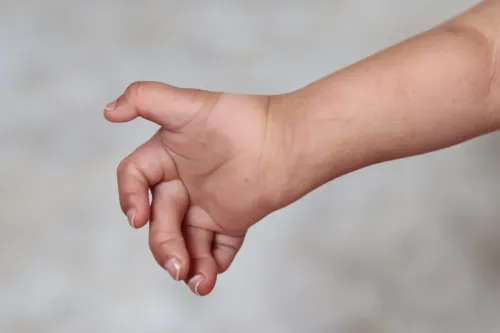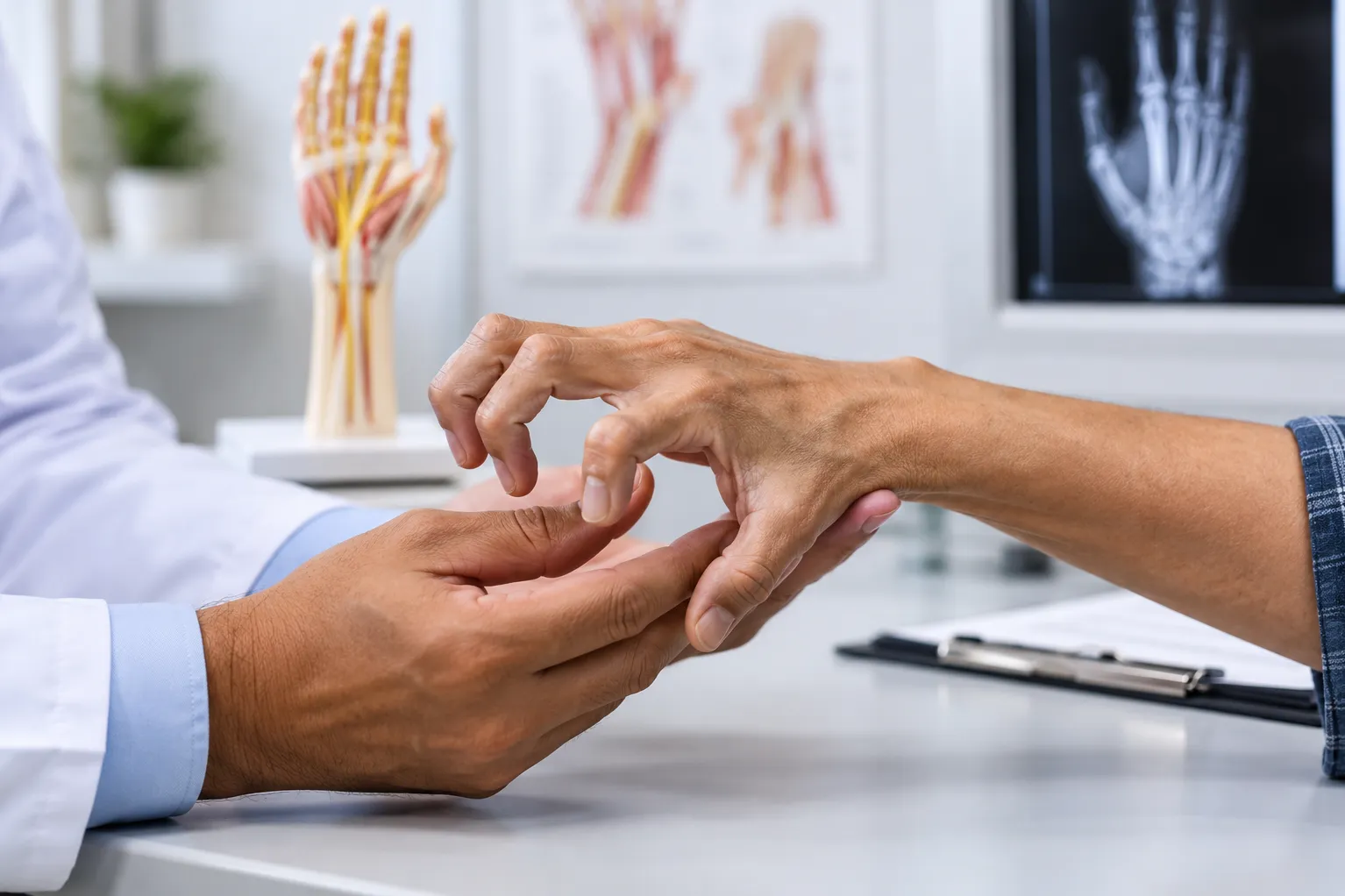
Clawing of the fingers can make everyday activities unexpectedly difficult. Holding a glass, buttoning clothing, typing, handling small objects may become challenging when the hand loses normal muscle balance. Claw Hand Treatment begins by identifying the nerve problem, muscle imbalance, structural changes responsible for the deformity.
The condition often produces excessive extension at the knuckles with bending of the finger joints. Ulnar nerve dysfunction is a recognised cause, although the exact pattern can vary according to which nerves plus muscles are affected.
Patients in Thane, Maharashtra, experiencing progressive finger deformity should consider orthopaedic assessment before stiffness becomes established.
Why the Fingers Begin to Claw
Normal finger position depends on coordinated activity between multiple muscle groups.
When intrinsic hand muscles become weak, stronger opposing muscles can pull the fingers into an abnormal posture. Over time, a flexible deformity can become increasingly fixed.
This progression is important because treatment options may differ according to whether the joints remain passively correctable.
Symptoms Beyond Finger Appearance
Claw hand can be accompanied by other signs of nerve dysfunction.
These can include:
- Weak grip
- Reduced pinch strength
- Difficulty spreading the fingers
- Numbness
- Tingling
- Muscle wasting
- Reduced hand coordination
- Difficulty handling small objects
The distribution of numbness plus weakness can help identify the affected nerve.
Finding the Underlying Cause
Treatment should not focus exclusively on straightening the fingers.
Clinical evaluation may examine the elbow, forearm, wrist, hand because nerve compression can occur at different locations.
Investigations may include nerve conduction testing, electromyography, imaging where clinically appropriate.
The assessment also considers how long the weakness has been present. Long-standing muscle denervation can influence reconstructive options.
Non-Surgical Management
When the underlying nerve retains recovery potential, treatment may include splinting plus hand therapy.
Therapy can help preserve joint flexibility, maintain available muscle strength, improve functional use of the hand.
A suitable splint may reduce excessive knuckle extension, helping the fingers adopt a more useful position during activity.
Patients should follow professional guidance because an unsuitable splint can restrict movement unnecessarily.
When Surgery May Enter the Discussion
Surgery may be considered in selected cases involving significant nerve compression, nerve injury, persistent deformity, poor functional recovery.
The procedure depends on the underlying problem.
Possible strategies can involve nerve decompression, nerve reconstruction, tendon transfer, correction of established contractures.
Tendon transfer does not simply move a tendon for cosmetic improvement. It aims to redirect functioning muscle power to compensate for lost function.
Why Timing Can Influence Treatment
Long-standing deformity can lead to joint stiffness plus soft-tissue shortening.
A flexible claw hand generally presents different reconstructive possibilities from a fixed deformity. This makes timely assessment valuable, particularly when symptoms continue to progress.
At About The Bone and Joints - Advance Ortho Care in Thane, patients can undergo evaluation to identify the neurological plus mechanical factors contributing to hand dysfunction.
People across Thane plus Maharashtra should seek assessment when finger posture changes are accompanied by weakness, numbness, muscle wasting, declining grip.
Claw Hand Treatment is most effective as a diagnosis-led process. Determining the affected nerve, location of injury, flexibility of the fingers, remaining muscle strength helps establish whether rehabilitation, splinting, nerve treatment, and reconstructive surgery deserves consideration.
Keywords