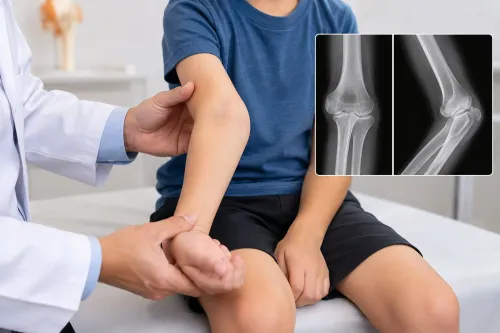
High-energy injuries can cause fractures that are very different from routine broken bones. Complex Trauma, Pelvic and Acetabulum Fractures may involve multiple structures, major weight-bearing surfaces, significant soft-tissue injury, associated internal injuries.
The pelvis forms a strong ring connecting the spine to the lower limbs. The acetabulum forms the socket of the hip joint. Damage in these areas can affect stability, mobility, hip function.
For patients reaching trauma services in Thane, Maharashtra, early stabilisation plus accurate assessment can be critical.
How These Injuries Commonly Occur
Pelvic plus acetabular fractures can occur following significant trauma such as road traffic collisions, falls from height, crushing injuries.
In older adults with weaker bones, some fractures can occur following lower-energy falls.
The injury pattern matters because not every pelvic fracture has the same level of severity.
Why Initial Trauma Assessment Is Important
With major trauma, the visible fracture may not be the only concern.
Medical teams may need to assess circulation, breathing, neurological status, abdominal injury, urinary tract injury, chest injury, additional fractures.
Potential warning features following significant trauma can include:
- Severe pelvic pain
- Inability to stand
- Inability to bear weight
- Hip pain
- Limb deformity
- Numbness
- Weakness
- Dizziness
- Significant swelling
- Difficulty moving the affected leg
Severe trauma requires emergency assessment rather than delayed outpatient evaluation.
Imaging Defines the Fracture Pattern
Plain X-rays provide useful initial information. CT imaging can offer a more detailed view of complex fracture anatomy.
For acetabular injuries, understanding which portion of the socket has fractured is particularly important because the acetabulum contributes directly to hip-joint stability plus load distribution.
Treatment decisions can depend on displacement, stability, joint congruity, associated injuries, patient health.
Does Every Fracture Require Surgery?
No. Some stable fractures can be managed without surgical fixation.
More complex injuries may require operative stabilisation when fracture displacement, instability, joint involvement, associated structural damage make non-surgical management unsuitable.
The decision needs individual assessment.
When surgery is required, planning may involve restoring alignment plus stabilising fracture fragments using appropriate fixation.
Rehabilitation Is Part of Trauma Recovery
Recovery does not finish when the fracture has been stabilised.
Rehabilitation can involve pain management, safe positioning, mobility training, gradual weight-bearing, muscle strengthening, prevention of complications.
The permitted amount of weight placed through the injured side depends on the fracture pattern, treatment method, healing progress.
Follow-up imaging can help determine whether healing is progressing appropriately.
Why Specialist Experience Matters
Complex pelvic trauma requires detailed knowledge of anatomy, fracture patterns, surgical approaches, fixation principles.
At About The Bone and Joints - Advance Ortho Care, Thane, patients requiring specialised orthopaedic evaluation can be assessed according to injury characteristics plus functional needs.
People across Thane plus nearby Maharashtra regions dealing with serious pelvic trauma should avoid assuming that all fractures follow the same recovery pathway. A small stable fracture differs considerably from a displaced acetabular injury affecting the hip socket.
Timely trauma assessment, accurate imaging, appropriate stabilisation, structured rehabilitation provide the foundation for managing these challenging injuries. Treatment planning must remain individual because fracture configuration, associated injuries, age, bone quality, general health can substantially influence the recommended approach.
Keywords