
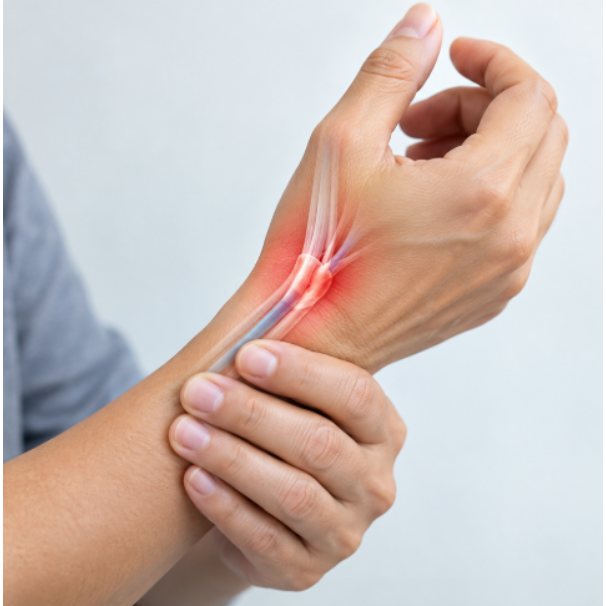
Pain near the base of the thumb can make surprisingly simple activities uncomfortable. Lifting a child, opening a container, using a phone, gripping a bag, performing repetitive hand tasks may aggravate symptoms. De Quervain’s Tenosynovitis Treatment focuses on reducing irritation affecting the tendons that travel along the thumb side of the wrist.
The condition involves tendons passing through a narrow compartment near the wrist. Repetitive loading plus local irritation can contribute to pain during thumb movement.
For patients in Thane, Maharashtra, persistent symptoms deserve proper assessment because several wrist conditions can produce discomfort in a similar area.
Recognising the Typical Pattern
Pain is usually felt on the thumb side of the wrist. It may extend toward the thumb plus forearm.
Patients may experience:
- Pain while gripping
- Pain while lifting
- Tenderness near the thumb-side wrist
- Swelling
- Discomfort during thumb movement
- Difficulty performing repetitive hand tasks
Symptoms can gradually become troublesome enough to affect household activities, office work, childcare, sports.
Why Self-Diagnosis Can Be Misleading
Not every episode of thumb-side wrist pain is De Quervain’s tenosynovitis.
Arthritis near the thumb base, wrist ligament problems, fractures, nerve-related conditions, other tendon disorders can produce overlapping symptoms.
Clinical examination helps determine which structure is generating pain.
Imaging is not necessary in every straightforward case, but X-rays plus other investigations may be considered when another diagnosis is suspected.
Initial Treatment Options
Many patients begin with conservative management.
Depending on symptom severity plus clinical findings, treatment may include:
- Modification of aggravating activity
- Temporary thumb-supporting splint
- Appropriate pain management
- Guided exercises
- Hand therapy
- Local treatment recommended by the clinician
Reducing repeated provocative movement can give irritated tissues an opportunity to settle.
Complete long-term avoidance of hand use is generally not the goal. The aim is controlled recovery followed by gradual return to necessary activities.
What Happens When Symptoms Continue
Persistent symptoms require reassessment.
A clinician may review whether the diagnosis is correct, whether activity modification has been adequate, whether another intervention is appropriate.
Injection treatment can be considered in selected patients. Individual risks plus suitability should be discussed before proceeding.
Surgical release may be evaluated when symptoms remain significant despite suitable conservative care. Surgery aims to create adequate space for the affected tendons to glide.
Avoiding Common Mistakes
Continuing the same painful repetitive activity without modification can prolong irritation.
Another mistake is relying repeatedly on pain medication while ignoring the mechanical trigger.
Patients should also avoid forcing painful stretches without professional guidance. More exercise is not automatically better when a tendon remains irritated.
When to Seek Specialist Evaluation
Pain that persists, worsens, interferes with grip, limits routine activities deserves evaluation.
At About The Bone and Joints - Advance Ortho Care, Thane, wrist assessment can help distinguish De Quervain’s tenosynovitis from other causes of radial-sided wrist pain.
For people working across Thane plus Maharashtra, occupational demands may also need consideration. Repetitive gripping, lifting, prolonged hand use can influence symptom management.
De Quervain’s Tenosynovitis Treatment should progress according to symptom severity plus response to conservative care. Accurate diagnosis, sensible activity modification, appropriate rehabilitation provide a practical starting point before invasive treatment is considered.
Keywords


