Persistent knee pain in a relatively young, active adult does not automatically mean that joint replacement is required. Sometimes the underlying problem is related to how body weight passes through the knee. High Tibial Osteotomy is a joint-preserving procedure that may be considered in selected patients when abnormal alignment places excessive stress on one portion of the knee.
The procedure involves carefully changing the alignment of the upper tibia. This shifts mechanical loading away from the damaged knee compartment toward a healthier area of the joint.
For active patients in Thane, Maharashtra, this can be particularly relevant when early compartment-specific arthritis occurs alongside lower-limb malalignment.
Why Knee Alignment Matters
When standing, walking, climbing stairs, the forces passing through the knee are influenced by leg alignment.
If alignment consistently directs excessive load through an already damaged compartment, cartilage deterioration may continue. Correcting the mechanical axis can redistribute that load.
High Tibial Osteotomy therefore addresses biomechanics rather than simply treating pain.
Who May Be Evaluated for This Procedure
Patient selection is crucial. The procedure may be assessed in people who have:
- Arthritis concentrated predominantly in one knee compartment
- Varus-type alignment
- Activity-related knee pain
- Relatively preserved cartilage elsewhere
- Useful knee movement
- Suitable ligament stability
- A desire to maintain an active lifestyle
- Symptoms that remain significant despite conservative treatment
Age alone does not determine suitability. Activity expectations, weight, cartilage condition, ligament function, severity of deformity, smoking status, general health can influence treatment planning.
What Happens Before Surgery
A detailed assessment is required before deciding whether an osteotomy is appropriate.
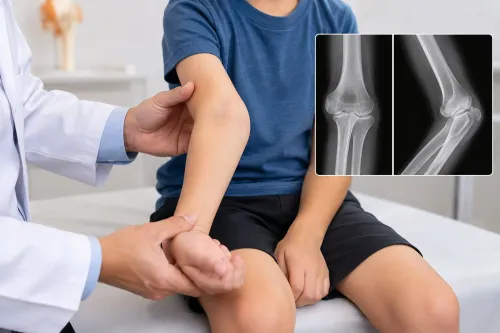
Standing X-rays can provide information about joint-space narrowing plus overall alignment. Long-leg alignment imaging may be used to evaluate the mechanical axis from the hip through the knee toward the ankle.
The surgeon may also examine:
- Location of pain
- Knee range of motion
- Ligament stability
- Previous injuries
- Previous operations
- Cartilage condition
- Degree of deformity
- Functional limitations
This evaluation helps calculate the correction required.
What Patients Should Understand About Recovery
High Tibial Osteotomy is a significant orthopaedic procedure. Recovery requires time for bone healing followed by progressive rehabilitation.
Weight-bearing recommendations vary according to surgical technique, fixation, bone quality, individual healing. Physiotherapy may focus on restoring movement, maintaining muscle function, rebuilding strength, improving gait.
Returning to demanding activity is usually gradual.
Follow-up imaging may be used to monitor healing before higher-load activities are resumed.
Common Misunderstandings
One misconception is that osteotomy is simply a treatment for any form of knee arthritis. It is not.
Its usefulness depends heavily on the relationship between cartilage damage plus alignment. Advanced disease throughout multiple knee compartments may require a different treatment strategy.
Another misconception is that correcting alignment permanently prevents arthritis. Osteotomy may reduce excessive loading across the affected compartment, but it cannot restore severely lost cartilage to its original condition.
Getting the Diagnosis Right
At About The Bone and Joints - Advance Ortho Care, Thane, assessment of alignment-related knee pain can involve clinical examination plus appropriate imaging before surgical options are discussed.
Patients from Thane plus surrounding Maharashtra communities may seek evaluation when knee pain starts limiting work, exercise, walking, sports participation.
High Tibial Osteotomy is best understood as a carefully selected joint-preservation strategy. Its purpose is to improve the mechanical environment of the knee while retaining the patient’s natural joint. Determining whether that strategy fits a particular patient requires assessment of the complete knee rather than a decision based solely on age, pain intensity, a single X-ray finding.
Keywords