A hand that suddenly becomes difficult to lift at the wrist can interfere with writing, gripping, dressing, typing, everyday work. Wrist Drop Treatment depends first on identifying why the muscles responsible for lifting the wrist are no longer functioning normally.
Wrist drop is commonly associated with dysfunction of the radial nerve. This nerve supplies several muscles involved in wrist plus finger extension. The nerve can become affected at different points along its pathway.
For patients in Thane, Maharashtra, early assessment can help determine the location plus severity of the problem.
What Wrist Drop Looks Like
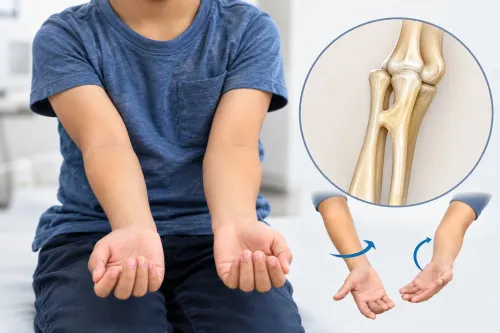
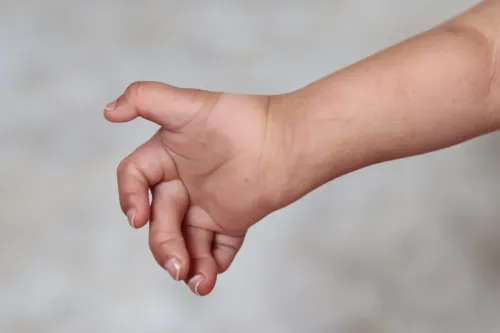
A person may notice that the wrist remains flexed when trying to hold the hand straight.
Other symptoms can include:
- Difficulty extending the wrist
- Difficulty straightening the fingers
- Reduced grip effectiveness
- Numbness over part of the hand
- Weakness after an arm injury
- Difficulty performing fine tasks
The exact pattern of weakness provides useful clues about where the nerve may be affected.
Possible Causes
Radial nerve dysfunction can occur following fractures, compression, prolonged pressure, penetrating injuries, surgical complications, other neurological conditions.
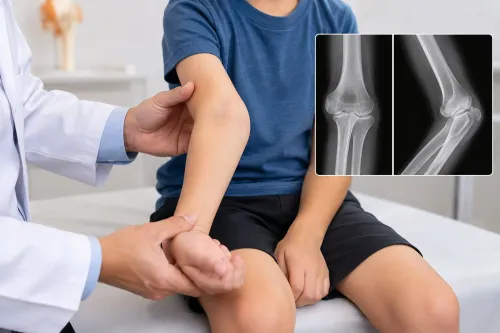
A fracture involving the shaft of the humerus is one recognised setting where radial nerve function may become affected because of the nerve’s anatomical relationship with the upper arm.
Not every case has the same cause. Treatment therefore should not begin from the assumption that all wrist drop requires surgery.
How the Cause Is Investigated
Clinical examination usually evaluates muscle strength, sensation, reflexes, injury history.
Depending on the circumstances, investigations may include:
- X-rays following trauma
- Nerve conduction studies
- Electromyography
- Ultrasound
- MRI in selected situations
The timing of nerve studies may matter because nerve recovery changes over time.
Treatment Depends on Nerve Status
Some nerve injuries can recover without surgical reconstruction. Observation, splinting, physiotherapy, protection of the hand may form part of treatment.
A wrist splint can help maintain a more functional hand position while nerve recovery is monitored.
Physiotherapy may focus on maintaining joint flexibility plus preventing stiffness. Muscle function can be reassessed periodically.
More severe nerve injuries may require surgical exploration, nerve repair, nerve grafting, tendon transfer depending on the underlying pathology plus expected recovery.
When Waiting May Need Reassessment
Observation should be structured rather than indefinite.
A patient may require further evaluation when:
- Weakness progresses
- New sensory symptoms develop
- Recovery does not appear as expected
- A significant fracture caused the problem
- There is suspicion of nerve disruption
- Function remains substantially impaired
Repeated clinical examinations can show whether muscle power is returning.
Choosing Care Based on Diagnosis
At About The Bone and Joints - Advance Ortho Care in Thane, evaluation of wrist drop can focus on determining the underlying cause before deciding on the treatment pathway.
For patients across Thane plus surrounding Maharashtra areas, this distinction is important. Wrist drop describes a functional problem rather than a single disease.
The appropriate strategy may range from splinting plus rehabilitation to specialised reconstructive surgery. The decision depends on nerve continuity, cause, duration, associated injuries, degree of weakness, evidence of recovery.
Seeking assessment when wrist weakness develops can provide a clearer diagnosis plus a structured plan for monitoring recovery. Treatment is most useful when directed at the actual neurological problem rather than the visible position of the wrist alone.
Keywords